Home Renovation Design Services

A home renovation in British Columbia is rarely just a construction project. It's a permit project, a code-compliance project, and a city-hall project first. Get those right and the build itself is the easy part.
  1. 1
    Define Scope & Budget
  2. 2
    Original Drawings Audit
  3. 3
    Title & Feasibility
  4. 4
    Design & Code Review
  5. 5
    Permit Submission

The Permit Process at a Glance

A summary of the activities, key documents, and deliverables you can expect when navigating a renovation building permit in BC.

Step Key Activities Primary Deliverable
1. Define Scope & Budget Identify exact changes to the building envelope, layout, and exterior. Establish budget parameters including potential code-upgrade costs. Clear Scope of Work
2. Original Drawings Audit We request city records and compare them to the current physical structure to identify any unpermitted past work that will flag your application. Base Building Verification
3. Title & Feasibility We pull LTSA records to surface covenants and rights-of-way, then cross-reference your scope against zoning bylaws and building codes. Feasibility Report & Fixed-Fee Quote
4. Design & Code Review Schematic design, spatial calculations, fire separation strategy, and coordination with structural or energy engineers. Permit-Ready Construction Drawings
5. Permit Submission We assemble the application package, coordinate engineering stamps, and hand off a complete file for municipal intake. Submitted Permit File
Video Guide

Prefer to Watch?

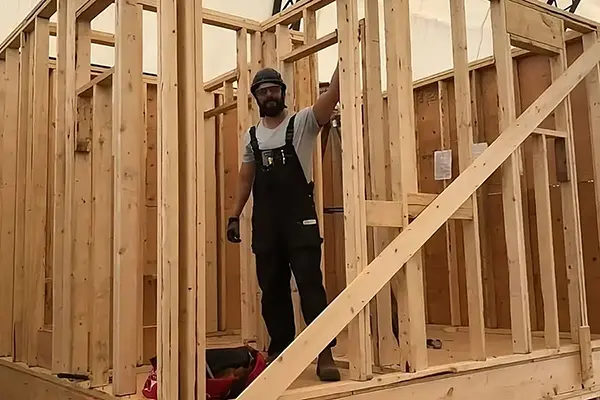
Edward walks through the permit process in 10 minutes. Original drawings, the land title, energy step code trade-offs, and the as-built measuring explanation — all on one page.

Watch the Video

How to get a Renovation Permit in BC

10 minutes · 22 chapters · Full transcript

Watch Video

What Kinds of Renovations Need a Permit?

Painting, flooring, and replacing cabinets without layout changes are cosmetic. They do not require a permit. The permit threshold is crossed the moment you alter the structure, plumbing, electrical, fire separations, or the building envelope.

Common residential permit projects include:

  • Income properties: Converting a basement into a legal secondary suite.
  • Interior transformations: Removing load-bearing walls or completely reconfiguring the floor plan.
  • Home additions: Expanding the footprint for a growing family.
  • Exterior living: Adding a new deck, covered patio, or altering window and door openings.

Step 1: Define the Exact Scope of Work

Defining your scope is more than saying, "We want to open up the kitchen." You need to identify every physical change to the property.

The municipality doesn't just review what you are applying for today; they audit your entire property against the original drawings on file. If a previous owner enclosed a carport without a permit 15 years ago, your kitchen renovation permit will trigger a review of that carport. You will be responsible for bringing that past unpermitted work into compliance.

Key scope questions that dictate your permit path:

  • Are you altering the exterior? Punching in a new window or replacing a window with a sliding door directly affects your spatial separation calculations and building envelope.
  • Are you proposing a deck? A ground-level deck has one set of rules. A deck with a roof canopy immediately triggers different lot coverage limits and setbacks.
  • Are you finishing a basement? Adding bedrooms or a suite triggers life-safety requirements like egress windows and fire separations.

We force clarity on the scope early to save you headaches at the City later.

Step 2: Audit the Original Drawings

Your next step is retrieving the original house drawings from your local building department. We compare these records to the actual physical state of your house today.

  • Identifies unpermitted work: If the physical house doesn't match the city's paper records, we have a baseline discrepancy that must be addressed in the new permit application.
  • Saves field time: Having the original approved structural layout reduces the need for invasive exploratory demolition.
  • Establishes code baselines: We must evaluate what was permitted decades ago against today's BC Building Code requirements.

If no original drawings exist (common for pre-1980s homes) or the home has been heavily altered off-record, we perform an As-Built Measuring service using 360° LiDAR scanning to create a millimeter-accurate digital twin of your existing conditions.

Step 3: Land Title & Feasibility Check

Before you pay for architectural design, you need a current land title from LTSA.ca and a feasibility check. We cross-reference your scope against the zoning bylaw, building code, and land title to ensure the project is actually buildable.

  • Rights-of-Way: The city reserves specific strips of your land for underground services. You cannot build a home addition over a municipal storm sewer right-of-way.
  • Covenants: Legal restrictions registered to your property that can override standard zoning. A covenant might cap your building height at 20 feet, even if the local zone allows 30 feet.
  • Lot Coverage & FSR: The maximum allowable square footage under today's bylaw is often less than what was approved decades ago. We run the gross floor area calculations before you commit to a design.

If a project violates these parameters, we flag it immediately and pivot the design strategy.

Step 4: Design & Code Review

Once feasibility is confirmed, we draft the permit-ready construction drawings. This involves highly technical coordination to ensure the design passes municipal intake.

Spatial Calculations (Windows and Doors)

The BC Building Code limits the amount of glazed (glass) area on each side of your house to prevent fire spread to neighbouring properties and to protect privacy. If your renovation adds large sliding doors or massive exterior windows, we run the spatial separation calculations. If you exceed the allowable percentage based on your distance to the property line, we either adjust the design or specify expensive fire-rated glazing.

Fire Separations

Fire separation requirements are non-negotiable. If your renovation includes a secondary suite, it must be fully fire-separated from the main dwelling. This dictates specific drywall assemblies for ceilings and walls, and governs how plumbing and HVAC ducting can penetrate those barriers. Warning: If an unpermitted secondary suite causes a fire, insurance companies routinely void coverage.

BC Energy Step Code

The Energy Step Code requires major renovations to meet strict energy-efficiency targets. This usually requires bringing an Energy Advisor onto the project. You should budget for upgrades to wall assembly R-values, higher-efficiency windows, and mechanical system improvements. We coordinate directly with the Energy Advisor to integrate these requirements into the architectural drawings.

Stair Geometry

If you are reconfiguring stairs, be aware that the BC Building Code enforces strict minimums for rise, run, width, and landings. Winder-style staircases (pie-shaped steps that turn without a landing) have not been permitted since 2012. Upgrading an old staircase to modern code almost always requires consuming more floor area than the original stairs did.

Step 5: Permit Submission

Once the design, spatial calculations, and engineering coordination are complete, we assemble the final application package. We ensure the structural engineer's Schedule B, the Energy Advisor's compliance reports, and the architectural drawings are perfectly aligned. You (or your contractor) submit the package as the owner of record, backed by a bulletproof documentation set designed to clear municipal review with minimal friction.

Site Plan and Setbacks

We review the site plan from your original drawings or land survey. The site plan shows the setbacks — the required distance between your home and the property lines, easements, and rights of way. Every addition or new structure must respect the setback rules in your zone.

Building Calculations: Lot Coverage and Square Footage

We run the lot coverage and gross floor area calculations against today's zoning. Two important things to know:

  • The maximum allowable square footage under today's bylaw is often less than what was approved decades ago. A home that was legal at 3,200 sq ft in 1975 may be over the current maximum in 2025.
  • If you're planning to add square footage based on a previous calculation, the new calculation may not allow it.

This is one of the most common surprises in renovation projects and the reason we run the numbers before design starts.

Land Title Review

We dig into the covenants and rights of way in detail. As mentioned above, these can override zoning. A covenant that limits building height to 25 feet, for example, applies even if your zone allows 35.

Zoning Bylaw Compliance

We check your proposal against every applicable section of the local zoning bylaw: setbacks, height, lot coverage, parking, secondary suite requirements (if applicable), and any use-specific provisions.

BC Building Code Compliance

We review the technical requirements under the BC Building Code. The key areas for renovations are:

  • Construction assemblies for energy efficiency and structural performance
  • Fire separations between dwelling units, between the garage and living space, and around mechanical rooms
  • Egress — window sizes, door widths, hallway dimensions
  • Spatial separation (more on this below)
  • Stair geometry (more on this below)

Step 6: BC Energy Step Code

The BC Energy Step Code came into effect at the end of 2018. It requires new construction and major renovations to meet progressively stricter energy-efficiency targets, with the province aiming for net-zero energy-ready homes by 2032.

For renovations, this typically means:

  • Bringing an energy advisor onto the project to model the home's energy performance and confirm it meets the required step
  • Upgrading wall assemblies to higher R-values
  • Upgrading window types to lower U-values
  • Upgrading the mechanical system to higher-efficiency equipment

The energy advisor's report becomes part of the permit submission. The cost of the upgrade work is often partially offset by lower long-term operating costs, but it does add to the upfront construction budget. We account for this in the feasibility stage so there are no surprises.

Fire Separations

Fire separation requirements are non-negotiable and especially critical if your renovation involves a secondary suite. The suite must be fully fire-separated from the rest of the home — including walls, ceilings, floors, and any penetrations for plumbing, electrical, or HVAC.

The reason this matters beyond code compliance: if you didn't pull a permit for a secondary suite, your home insurance can void your coverage in the event of a fire. We have seen cases where a fire in an unpermitted suite caused severe damage to the rest of the home, and the insurance company denied the claim because the suite was not built to code. A permit is not just a piece of paper — it's the proof that the work was done safely.

For non-suite renovations, fire separation requirements also apply to attached garages, mechanical rooms, and shared walls in multi-family buildings.

Spatial Calculations (Window Sizes and Placement)

Spatial calculations determine the maximum permitted glazed (glass) area on each side of your home. The logic is two-fold:

  1. Privacy for your neighbours. Big glass walls facing a side yard can put your living room on display.
  2. Fire spread prevention. In a fire, large glazed openings allow flames to radiate to neighbouring properties. The building code limits how much of each wall can be glass to reduce this risk.

The calculation looks at the distance to the property line and the proposed window-to-wall ratio. If your design exceeds the limit, we either reduce the glass area or add fire-rated glazing. Either way, we run the numbers during design so the permit reviewer doesn't catch it after the fact.

Stair Design

Stairs are one of the most common items that get flagged in plan review, usually because an early client sketch doesn't allow enough space for a code-compliant staircase.

The BC Building Code specifies:

  • Maximum rise per step (typically 200mm / 7-7/8")
  • Minimum run per step (typically 254mm / 10" between faces)
  • Minimum width of the stair (typically 860mm / 34" for residential)
  • Required landings at the top and bottom
  • Handrail height and graspability on at least one side

One specific change worth noting: winder-style staircases (pie-shaped steps that turn without a landing) have not been permitted in BC since the 2012 update to the code. If your renovation involves replacing or modifying an existing winder stair, the new code-compliant replacement almost always takes more floor area than the old stair. We design around this from the start.

As-Built Measuring (When Original Drawings Don't Exist)

If your home has no original drawings on file with the city, or if significant changes have been made since the last permit set, we need an as-built survey before we can design.

What counts as a "significant change"? Anything that would be hard to mark on the existing drawings — finished a basement, removed a wall, added a bathroom, reconfigured the kitchen.

We use a LiDAR scanner that captures 360° photos and millions of measurement points per room. The process that used to take us 8 hours of hand-measuring and sketching now takes about 3 hours, with significantly less human error. The output is a dimensionally accurate 3D point cloud that we convert into CAD-ready floor plans, elevations, and sections for the design.

A clarification that comes up often: as-built measuring is not the same as a land survey. As-built measuring documents the interior of the building — walls, doors, windows, finishes, fixtures. A land survey documents the exterior — property boundaries, grades, building setbacks, utility locations. We do as-built measuring. A BC Land Surveyor (BCLS) does land surveys. The two services are complementary for additions and major renovations.

Canadian Blueprint Logo

Canadian Blueprint Inc.

BC Building Design & Permit Drawings

Published July 21, 2025

Back to Services
Our Portfolio

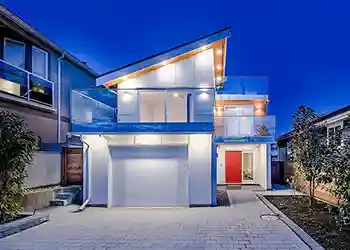
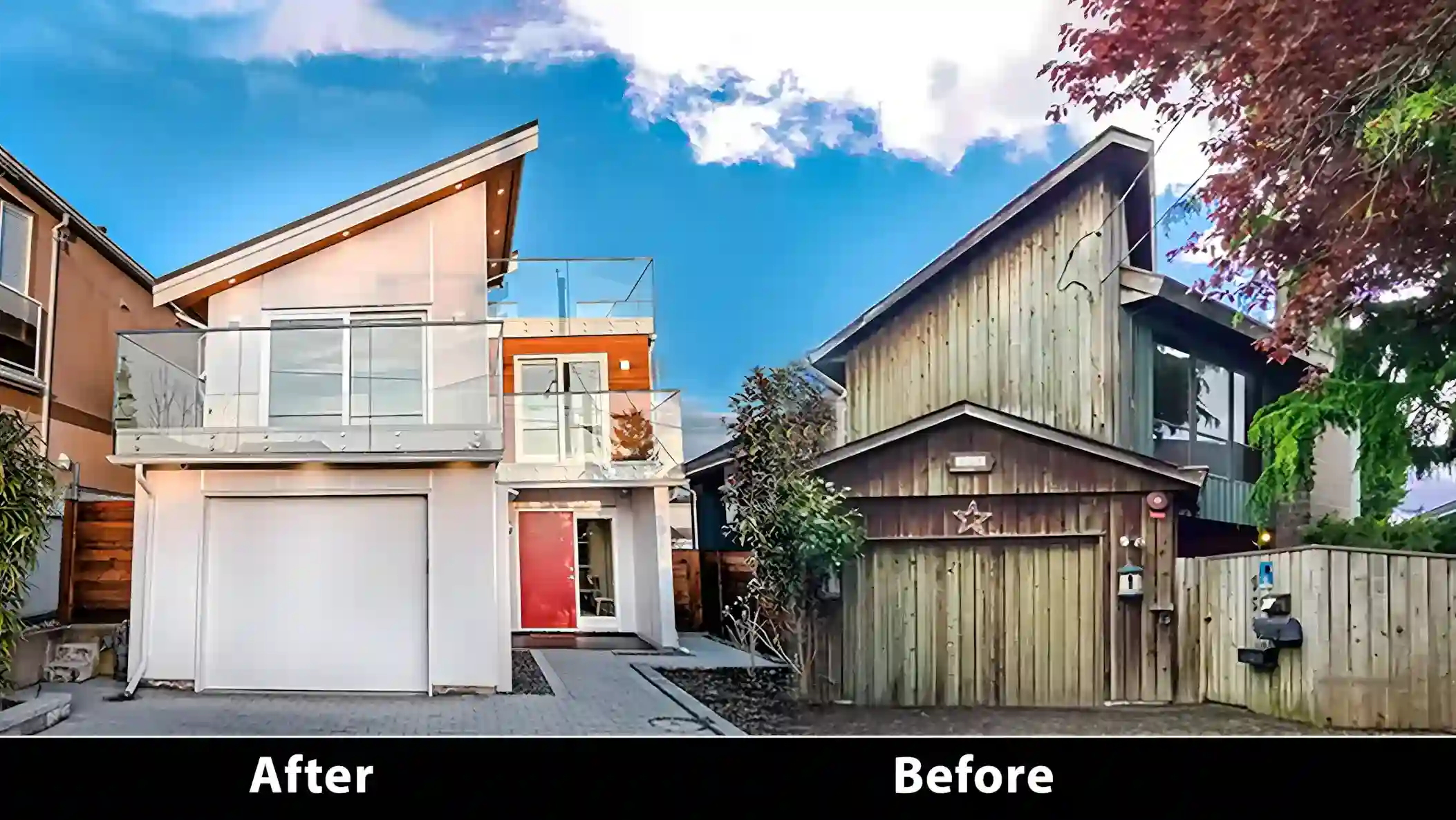
Featured Renovation Projects

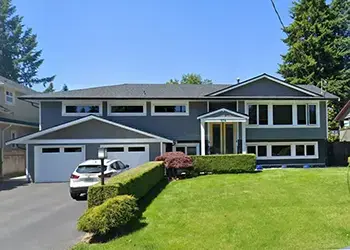
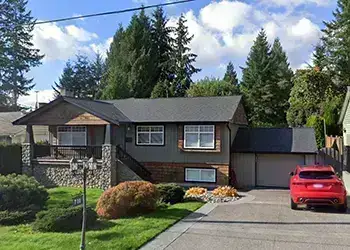
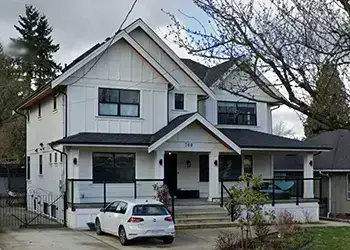
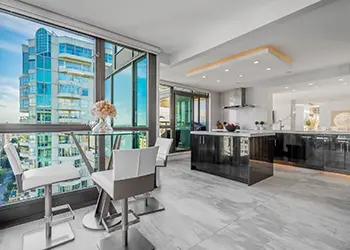
Explore a few of our successfully completed home renovation permit projects in British Columbia.

View All Renovation Projects
Next Steps

What to Send Us

If you're ready to start the conversation, send us the following items. We'll review them and get back to you within one business day.

Renovation Scope

A specific breakdown of exterior and interior changes.

House Drawings

Any original house drawings or past permit records you have.

Land Title

A current land title from LTSA.ca to check for covenants.

Photos

Wide-angle photos of the specific areas being renovated.

Let's Get Started

Take the next step in your building journey with our specialized design and permit services.

Home Renovation
Additions & major upgrades
  • As-Built Measuring
  • Structural Changes
  • Secondary Suites
  • Basement Finishing
  • Kitchen & Bath Remodels
  • Exterior Facelifts
Learn More →
As-Built Measuring
Precise LiDAR scanning
  • 360° Walkthrough
  • Point Cloud Data
  • Digital Twin
  • AutoCAD Floor Plans
  • Elevation Drawings
  • Detailed Sections
Learn More →
FAQ

Frequently Asked Questions

Answers to the most common questions homeowners ask before, during, and after a home renovation building permit in BC.

Still have questions?

Our team is ready to help clarify any details about your specific project.

Ask Us Anything